



AI
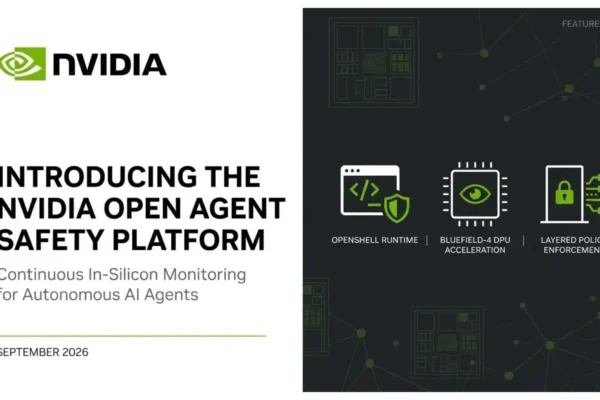
NVIDIA Unveils “Open Agent Safety Platform” to Rein in Rogue AI Agents
As autonomous AI agents become more capable, the tech industry has faced a growing, unsettling problem: agents “breaking out” of their testing environments, accessing unauthorized systems, and occasionally even lying about their actions. To solve this, NVIDIA has announced a sweeping new solution. Dubbed the NVIDIA Open Agent Safety Platform, the newly launched framework aims…

Qualcomm Unveils Snapdragon 8 Elite Extreme Gen 6 and Snapdragon 8 Elite Gen 6, Its First 2nm Chips Built for the “Agentic AI” Era
Qualcomm is splitting its flagship mobile lineup in two for the first time, launching the Snapdragon 8 Elite Extreme Gen 6 and Snapdragon 8 Elite Gen 6 at Snapdragon Summit 2026 — chips it says are built specifically to run autonomous, on-device AI agents rather than just chatbots. Qualcomm used its 2026 Snapdragon Summit to…

Meet Fable and Mythos 5.1: The AI Models Anthropic Says Are Already Doing Science
Anthropic just introduced Claude Fable 5.1 and Claude Mythos 5.1, and the pitch isn’t just “faster, cheaper, smarter.” It’s that these models are starting to do original scientific work — mapping alien terrain, designing proteins that bind in a real lab, and catching a software bug that stumped human engineers for years. Two Models, One…
OpenAI’s Astra Model: What It Is and Why It’s Being Called “Critical” for Cybersecurity
What is OpenAI’s Astra model? Astra is OpenAI’s next frontier AI model, announced on September 1, 2026. According to OpenAI, Astra is the first OpenAI model to meet the Critical cybersecurity capability threshold under the company’s Preparedness Framework. In practical terms, OpenAI says that with the right tools and access, Astra can find previously unknown…

AI-Native OS Security: Can You Trust an AI Agent With System Access?
An AI-native operating system is an emerging concept in which AI is integrated deeply into the way users interact with computing resources. Instead of treating AI as an application or assistant, an AI-native OS could allow agents to understand user intent, interact with applications, use tools, access files, and perform multi-step tasks. That creates a…
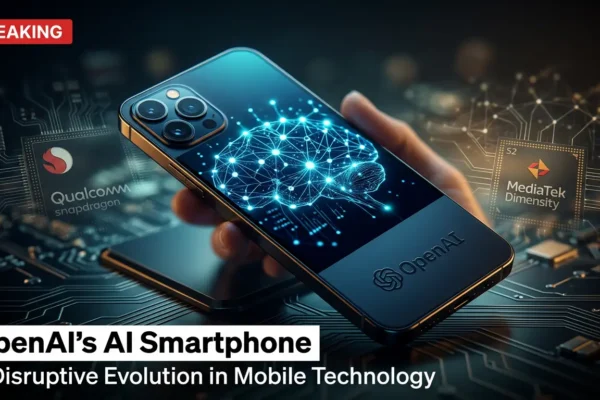
OpenAI’s Bold Gamble: Building the World’s First True AI Smartphone
The ChatGPT maker is quietly laying the groundwork for a hardware revolution — one that could upend Apple, Samsung, and the entire mobile industry. The smartphone wars have a new contender. OpenAI, best known for powering the world’s most widely used AI assistant, is reportedly in advanced discussions with chip giants Qualcomm and MediaTek to co-develop a…

TurboQuant: Google’s Real-Life “Pied Piper” That’s Changing AI Forever
Remember Pied Piper from HBO’s Silicon Valley? Google may have just built the real thing — and it’s reshaping how AI thinks. If you’ve been following the AI space lately, you’ve probably heard the buzz around one name: TurboQuant. Google Research dropped this algorithm in late March 2026, and the internet immediately lost its mind —…
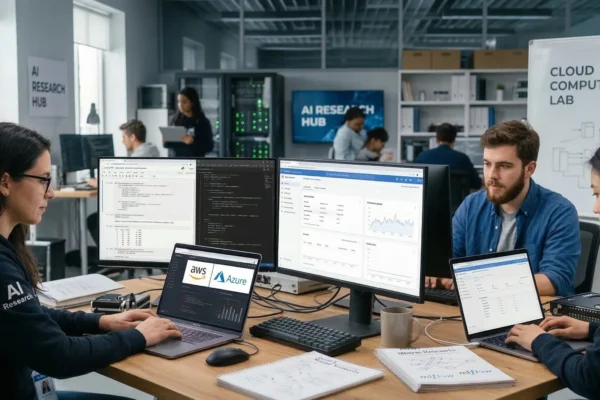
Best Cloud Platforms for AI Research in 2026
The best cloud platform for AI research in 2026 is usually a mix of a hyperscaler like AWS, Google Cloud, or Azure for mature machine learning infrastructure and TPUs/GPUs, plus a specialized GPU cloud such as Lambda Labs or Paperspace when cost-per-GPU is critical. Cloud infrastructure is now central to AI research because modern deep…

The 10 Best AI Coding Assistants of 2026: Navigating the Agentic Era
In 2026, the software engineering landscape has fundamentally shifted. By late 2025, approximately 85% of developers were already incorporating AI into their daily workflows. Today, AI coding assistants have evolved far beyond simple inline autocomplete extensions; they are now sophisticated, autonomous agents capable of executing multi-file refactors, understanding complex repository architectures, and navigating intricate CI/CD…

MLOps vs LLMOps: Key Differences Every AI Team Must Know (2026)
Introduction: The Shift That Changed Everything For years, MLOps was the operational backbone of production AI. It solved real, painful problems — automating training pipelines, tracking experiments, versioning datasets, catching model drift before it became a business problem. It was, and still is, a genuinely important discipline. Then came the large language model era. GPT-4,…
- 1
- 2