



10 Best SaaS Security Tools to Protect Your Cloud Applications in 2026
The rapid adoption of SaaS applications has transformed how businesses operate — but it has also introduced a sprawling attack surface that traditional security tools struggle to cover. A Cloud Security Alliance (CSA) survey found that 70% of organizations have now established dedicated SaaS security teams, yet 65% still struggle to manage risks from third-party SaaS integrations. From misconfigurations and identity misuse to shadow IT and data leaks, the threat landscape demands purpose-built tools. This guide breaks down the 10 best SaaS security tools in 2026 that help organizations regain visibility, enforce compliance, and neutralize threats across their entire cloud stack.
Why SaaS Security Is Non-Negotiable in 2026
SaaS applications like Microsoft 365, Salesforce, Google Workspace, and Slack form the backbone of modern business operations. Unlike on-premises software, these apps are externally hosted, multi-tenant, and operate under a shared responsibility model — meaning organizations must actively secure their own data and configurations. According to the same CSA survey, 25% of organizations experienced a cloud security incident in the past two years, with data breaches accounting for more than half.
SaaS Security Posture Management (SSPM) has emerged as a critical category within this space. SSPM tools continuously monitor SaaS apps for misconfigurations, excessive permissions, compliance gaps, and risky third-party integrations. They automate configuration checks, detect identity risks, and simplify compliance with frameworks like SOC 2, ISO 27001, HIPAA, and NIST.
10 Best SaaS Security Tools in 2026
1. Wiz
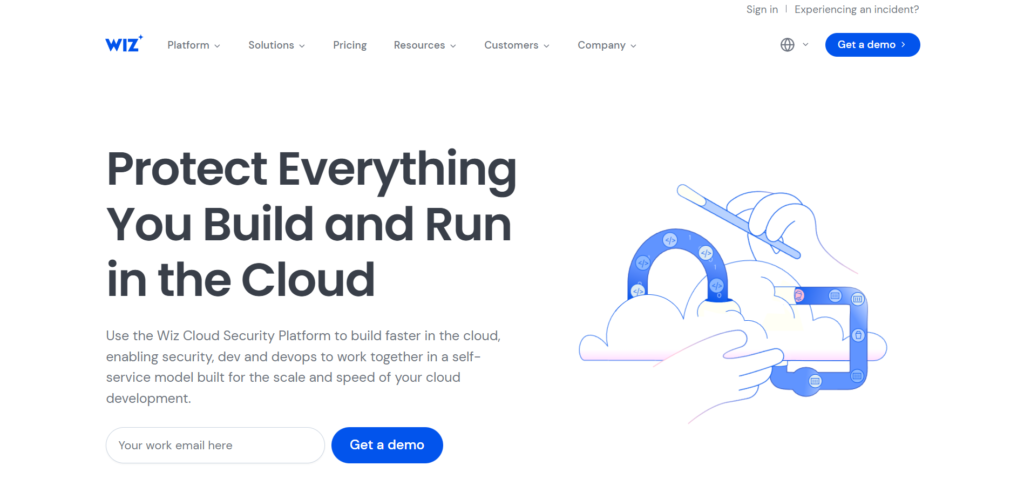
Wiz is a leading cloud-native application protection platform (CNAPP) trusted by more than 50% of Fortune 100 companies. It delivers agentless visibility across workloads, containers, serverless functions, and data stores via API — connecting in minutes with zero impact on performance. The Wiz Security Graph analyzes relationships between cloud technologies, correlating misconfigurations, vulnerabilities, and identity issues to surface critical attack paths.
In 2025, Wiz expanded its scope to cover SaaS (including Microsoft 365 integration), introduced AI-powered SecOps and Issues agents for automated remediation, and launched agentless threat detection for workloads. With the platform now extending from code to runtime across multi-cloud and SaaS environments, Wiz remains one of the most comprehensive choices for organizations seeking a unified cloud and SaaS security solution.
Best for: Enterprises needing unified cloud and SaaS security with deep contextual risk prioritization.
2. CrowdStrike Falcon Shield (SSPM)
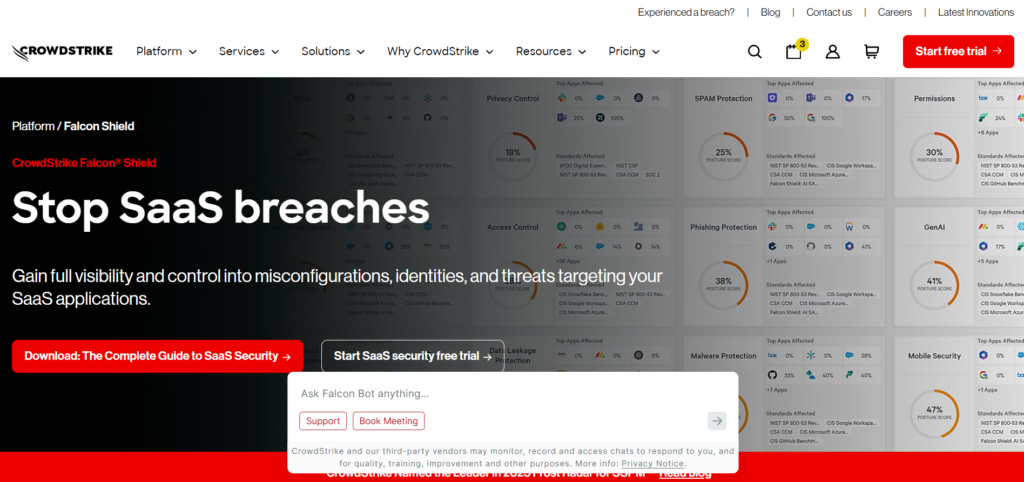
CrowdStrike Falcon Shield (formerly Adaptive Shield) is a dedicated SSPM solution that provides comprehensive coverage across over 180 SaaS applications. It continuously monitors for misconfigurations, detects security drifts in real time, and uses AI-powered risk assessment to prioritize vulnerabilities based on adversary activity and exploitability. Falcon Shield integrates seamlessly with CrowdStrike’s endpoint protection capabilities, enabling a unified view of SaaS application security posture alongside endpoint telemetry.
Automated remediation, integration with ticketing tools, and compliance alignment with industry standards round out a feature set designed for security teams already operating within the CrowdStrike ecosystem.
Best for: Midmarket to enterprise organizations wanting SSPM tightly integrated with endpoint security.
3. Netskope SSPM
Netskope offers deep visibility into SaaS environments with real-time data protection, cloud DLP, and insider threat prevention. Its SSPM module benchmarks SaaS configurations against standards like CIS and NIST, identifying misconfigurations, risky integrations, and compliance gaps while feeding insights into the broader Netskope Security Cloud. Context-aware policies enable fine-grained enforcement, making it a top-tier choice for businesses managing sensitive data across multiple SaaS platforms.
Netskope also includes a Cloud Access Security Broker (CASB) for granular access policies and risk scoring, plus real-time threat protection against malware, phishing, and insider threats.
Best for: Organizations requiring adaptive, context-driven SaaS security with strong DLP capabilities.
4. Zscaler Advanced SSPM
Zscaler integrates SaaS posture management directly into its Zero Trust Exchange, offering a centralized platform for configuration scanning, governance, and data policy enforcement. Operating on zero-trust principles, Zscaler ensures only authorized users access specific SaaS apps while reducing attack surfaces, detecting misconfigurations, and preventing lateral threat movement.
The platform combines CASB and DLP capabilities to identify risky or dormant integrations and enforce data-centric policies — all within a cloud-native architecture designed for scale.
Best for: Organizations already invested in zero-trust architecture seeking integrated SaaS posture management.
5. Microsoft Defender for Cloud Apps
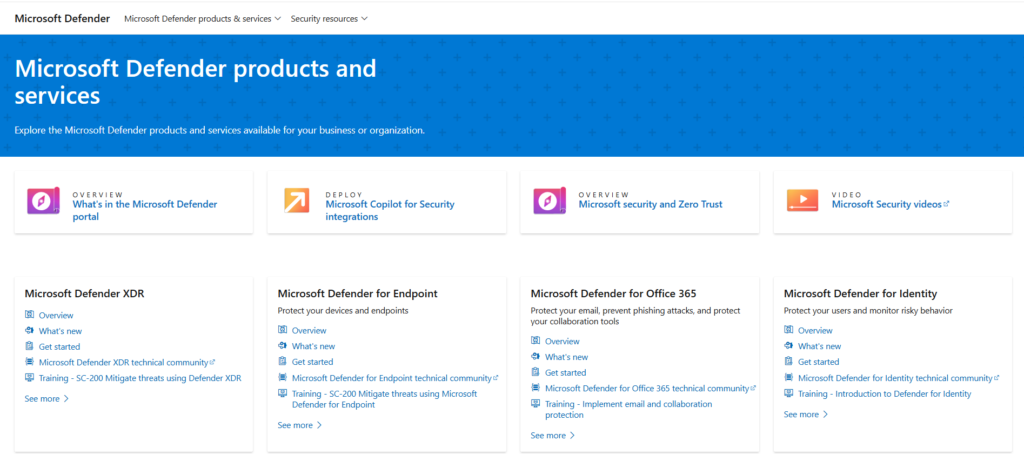
Microsoft Defender for Cloud Apps delivers full protection for SaaS applications, combining CASB functionality, SSPM features, and advanced threat protection as part of the Microsoft Defender XDR solution. Key capabilities include shadow IT discovery, user and entity behavior analysis (UEBA), data loss protection, and app-to-app protection for OAuth-enabled applications.
For organizations embedded in the Microsoft ecosystem, it offers seamless integration with Microsoft Entra ID, Microsoft Sentinel, and Microsoft Purview, plus AI-driven detection for GenAI applications. In late 2025, Microsoft expanded its dynamic threat detection model for more accurate, research-driven detections enabled by default.
Best for: Organizations using Microsoft 365 and the broader Microsoft security ecosystem.
6. Palo Alto Networks SaaS Security (Cortex Cloud)
Palo Alto’s SaaS Security platform combines inline enforcement, API-based scanning, and SSPM to protect both sanctioned and unsanctioned applications. Powered by Cortex Cloud (formerly Prisma), it uses AI backed by Palo Alto’s extensive threat intelligence database for strong threat detection, automated security policy enforcement, and compliance monitoring.
A robust policy engine provides granular control over enforcement, and extensive DLP capabilities keep sensitive information secure. The platform works smoothly with the broader Palo Alto ecosystem including Prisma Cloud and Cortex XDR.
Best for: Enterprises already using Palo Alto Networks products seeking unified SaaS and cloud security.
7. AppOmni
AppOmni offers dedicated SaaS posture management across major platforms including Salesforce, Microsoft 365, and Google Workspace. It continuously monitors security configurations, identity settings, excessive permissions, and data exposure risks — providing detailed insights and guided remediation to prevent sensitive data leakage.
CISOs gain granular visibility into third-party connections and can track configuration drift with automated alerts, making AppOmni a strong choice for organizations managing diverse SaaS portfolios.
Best for: Organizations needing deep posture management focused specifically on SaaS configuration and data exposure risks.
8. Obsidian Security
Obsidian Security focuses on protecting core SaaS applications like Microsoft 365, Salesforce, and Google Workspace by correlating identity behavior with application activity. This approach enables early detection of account compromise, insider misuse, and risky settings. The platform supports compliance frameworks such as SOC 2 and ISO 27001 with continuous monitoring and audit-ready reports.
A standout feature is the Obsidian Knowledge Graph, which unifies identity across SaaS to flag weak MFA, inactive accounts, shadow admins, and overly broad scopes for both human and non-human identities. Pricing starts at approximately USD 100 per user per year on the AWS Marketplace.
Best for: Security teams prioritizing identity-centric threat detection and behavioral analytics across core SaaS apps.
9. Valence Security
Valence Security combines SaaS discovery, posture management, identity threat detection, and automated remediation in a single platform. It highlights risks from SaaS-to-SaaS connections, misconfigurations, and sensitive data exposure, while extending visibility to GenAI applications — a growing concern in 2026. Guided workflows help security teams address issues at scale without disrupting business operations.
Best for: Organizations looking for a unified platform addressing configurations, identities, data, and integrations across SaaS.
10. Nudge Security
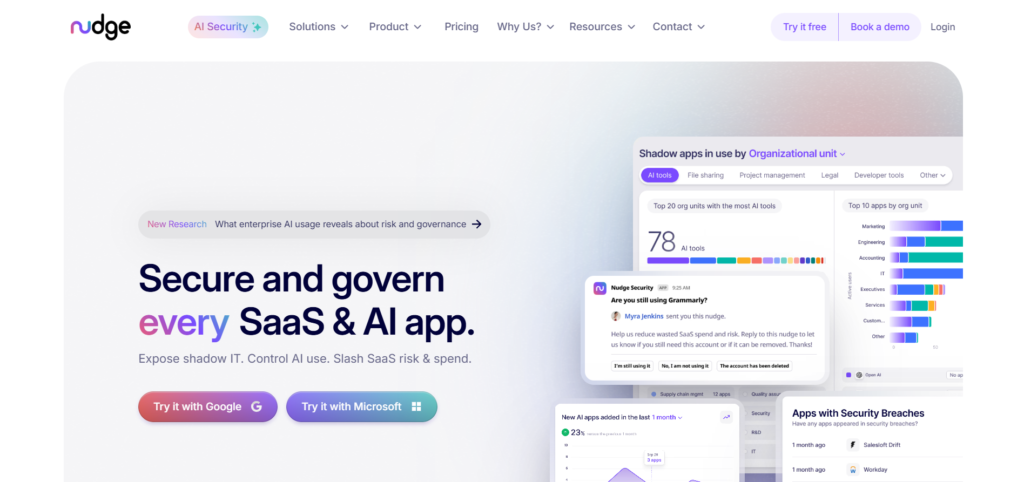
Nudge Security maps SaaS usage across the enterprise, showing which tools employees adopt and how accounts are used. It excels at managing shadow SaaS and applying governance policies aligned with real adoption patterns, giving CISOs visibility into decentralized IT purchases that often fly under the radar.
Pricing is transparent and accessible: USD 5/month per active user for teams with 150–2,500 accounts, or a flat USD 750/month for fewer than 150 accounts.
Best for: Organizations needing cost-effective shadow SaaS discovery and user-centric governance.
Quick Comparison
How to Choose the Right SaaS Security Tool
Selecting the right platform depends on several organizational factors:
- Existing ecosystem: Tools like Microsoft Defender for Cloud Apps or CrowdStrike Falcon Shield deliver maximum value when integrated with their parent ecosystems.
- Primary risk areas: Organizations struggling with misconfigurations need strong SSPM (AppOmni, Obsidian), while those battling shadow IT should prioritize discovery tools like Nudge Security.
- Compliance requirements: Regulated industries should evaluate platforms with built-in compliance mappings for SOC 2, ISO 27001, HIPAA, and NIST.
- Budget and team size: Startups and SMBs benefit from transparent pricing models like Nudge Security’s per-user approach, while enterprises may prefer bundled platforms from Wiz, CrowdStrike, or Palo Alto.
- SaaS-to-SaaS visibility: With 65% of organizations struggling to monitor third-party integrations, tools offering OAuth and API connection monitoring (Valence, Reco, AppOmni) are increasingly essential.
Essential Features to Look For
When evaluating any SaaS security platform, the following capabilities should be on every shortlist:
- Continuous misconfiguration detection with automated remediation workflows
- Identity and access governance covering both human and non-human identities
- Shadow SaaS discovery including unsanctioned and GenAI-powered applications
- Behavioral analytics for insider threat detection based on activity baselines
- Compliance automation with audit-ready reporting for major regulatory frameworks
- SaaS-to-SaaS integration monitoring to detect risky OAuth tokens and API connections